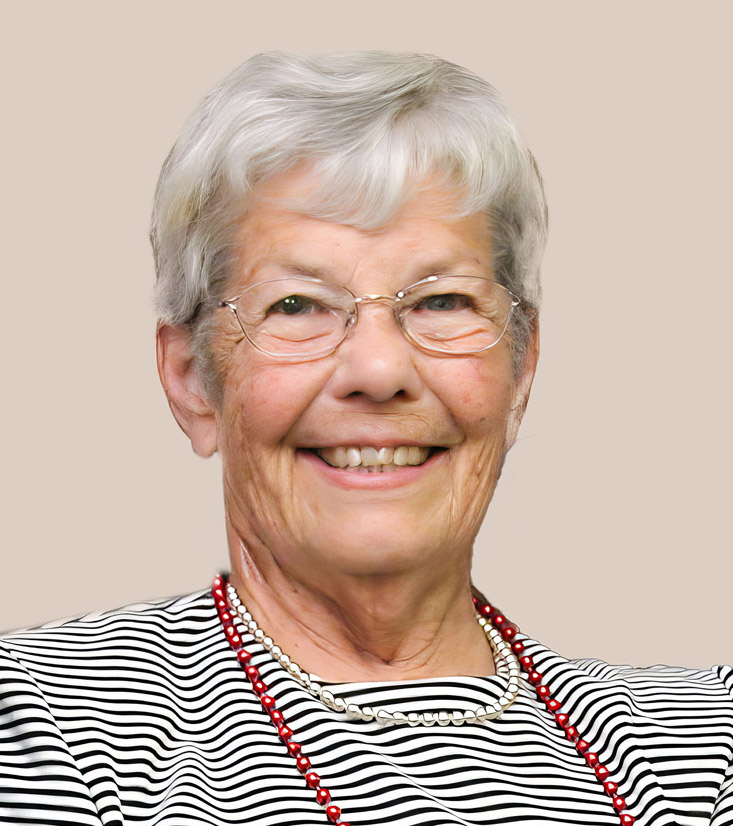
Dorothy Smith:
March 1925 – July 30, 2026
Links:
Dorothys photo album
Dorothy website
If you feel the need to donate in her name, may we suggest:
Little Free Libraries
Tri City Chaplainacy
Dorothy's Biography
I was born at home (not in a hospital) on March 24, 1925 in Bavaria, Kansas. Bavaria is now part of Salina, KS. I came with a ready made four and a half year old sister, actually a half sister as she was a product of Mom and her first husband. My father was in the construction business and was building a school in Bavaria, Kansas. Three months after I was born, Dad fell sixteen feet off the unfinished school building and broke both arms and one leg. Now Mom had to take care of a newborn, and a husband in a wheelchair.
Since my father was in the construction business, we moved on when the job was completed, mostly in Kansas. My sister, Eileen, was born October 21, 1926 while we were living in Salina. Six months later we were living in Stinette, Texas, then back to Norton, KS to build a courthouse, and a tuberculosis sanitarium. Many other places, too many to mention. We were in Norton when the stock market crashed in October 1929.
In 1930 we moved to Manhattan, KS, where my father was working on building a fraternity house near the college. This is where my memory kicks in. I was five years old and ready to start kindergarten, so my mother said she was not moving again. Blanche had already been in nine different schools, and she did not want that to happen to Eileen and me. We lived in several apartments before my mother decided we needed a house. Blanche was enrolled in Emerson Grade School, and she continued to go there, while Woodrow Wilson Grade School was the one Eileen and I enrolled in after we moved to our house.
The house was a small two bedroom, dining room, front room, kitchen, and room for a bathroom, but no fixtures. We had an outhouse in the back yard. It was on the edge of town, and across the alley was Ferleman's grocery store. Dad did not find work in Manhattan after the fraternity building was completed, but did find work in other towns. As soon as I was enrolled in school, my mother went to work in the Manhattan Laundry, one half block from our house, doing hand ironing as compared to mangles. Dad did finally finished the inside bath room. My father, living away from home, had to live in hotels, eat in diners, and for recreation he liked to drink and gamble. The further the work place was from Manhattan the less we saw of him. He didn't have much left over from his salary to give to my mother, and only gave her money when he came home for a weekend, and then not much. Mother supported us on her meager salary from the laundry. I remember my mother and father always shouting at each other, and I suppose it was because of the market crash and the distance that resulted from it. Blanche says she remembered the time before my memory kicked in, that they were a happy couple.
I was a very shy child, and Eileen was my sister and my best friend until I married. When I was in third grade, (teacher Miss Swartz) the class prepared a program for our mothers. When it came time for my part in the program, I stood up and started crying. My mother was sitting next to a mother who had a tap dancing studio, and suggested that maybe she should enroll me to help me overcome my shyness. I wouldn't go unless Eileen was also allowed to go too. Mom made costumes for us, and eventually we danced as a pair before some events at the college, or during intermission. Alas, the dancing did nothing to correct my problem. From an early age, Eileen tried to keep up with me in all thing physical and mentally. About the time I started to school we were about the same size, and some people thought we were twins. Mom dress us alike in home made dresses. I must have been in high school before I wore boughten dresses.
My memory kicks in about the time the depression hit, so it all seemed normal to me. I remember going across the alley, in the back door of the Ferleman's Grocery Store, through the storage area, and buying three slices of the cheapest cold meat to make our sandwiches to take to school the next day. Lots of times our Sunday supper was bread broken up in a bowl and milk poured over it, eaten with spoon. I do not remember ever being hungry. I did wonder why the couple across the street had fried chicken for Sunday night dinner, but then there was a father that had a job, a stay at home mother, and they lived on the second floor with his parents.
In the early 30's Manhattan had a flood, and since we live a short distance from the river, we were flooded out. The police station was down the alley, half a block, and I later learned that the policemen kept an eye on mom since there was no man of the house around. As the water started to come in the front yard, Blanche took Eileen and me to a friend of hers where we sat out the flood. Mom was setting furniture up on boxes when a policeman came by to help her. He also saw that she was safe and out of danger when the job was done.
We were not too far from the train tracks, and there were hobos knocking on our door regularly in the 1930s asking for food. Neither mom nor dad, when he was home, could turn them down, even with our meager food supply.
In the fall of 1938, I began having seizures, uncontrollable nervous shaking, By Christmas time it was so bad I was finally taken to the doctor. It was determined that I had infected tonsils. During Christmas vacation, I had my tonsils removed, and that essentially stopped the shaking, but it was determined that I had developed a heart murmur. I was able to resume going to school after the holidays, but I was allowed to change class rooms only after all the other kids were out of the hallways. That lasted the rest of that school year. I was enrolled in a typing class that semester, and it was the only class that I almost flunked. Got a grade of D. I blamed it on the illness. I was so happy when I got my first computer in the early 1990s that I could type with two fingers, no one needed to see me do it, and it was easy to correct my mistakes. My cousin, Bobby Zeman, developed the same symptoms about the same time, including the heart murmur. His parents kept him at home, protecting him, not allowing him to live a normal life. When he reached thirty years old, he struck out on his own, became a policeman, got married, had children, and moved to Rifle, Colorado. The heart did deteriorate, and he was one of the first to be eligible for a heart transplant in 1975. One became available, and he was flying to Denver to receive it, but died before it could be done.
I didn’t date much in high school. The one I saw the most was Ed Moritory. It was him, two of his friends and their dates that we all learned to ballroom dance. We did it in each other's homes. When I was a sophomore, he invited me to go to a school dance. My answer was "no". I was too shy to be seen by such a large group of people. It was okay with the four or six of us learning to dance. He went to my mother, to see if she could talk me into it. With Blanche’s help, they bought me a new plaid skirt and yellow sweater to wear, and I finally agreed to go. I only danced with Ed, and I do not remember it as being a fun event.
Once we moved to Manhattan, every summer until I was fifteen, Eileen and I went to Wakeeney, KS, to visit Mom's relatives: grandparents, 2 uncles, and 2 aunts. We were required to stay with the grandparents for a few days before moving on to the other relatives. Grandma was a grouch, and Eileen and I did not take to her. Grandfather was a different story. He was fun to be with, but grandma made it difficult to be around him for very long. For the few days we had to spend with them, we were outside playing with a neighbor girl. Aunt Mary (mother's sister) and her husband took us to their farm. They had four boys and we were allowed to help with the farm chores, and help in the kitchen. It was way better than staying with the grandparents. Their oldest son, Dale, was obviously Grandma's favorite grandchild, and we all knew it. Two days with Aunt Mary, then we were off to Uncle Charles (mother's brother) and Aunt Elma. They also had four boys, and it obvious that they had hoped for at least one girl. We were welcomed with open arms. The boys saw that we had a good time on the farm. We gathered eggs, tried to milk cows, helped Aunt Elma bake cakes and cookies, played in the hay loft, etc.
After my junior year in high school, Dad decided it was time for Eileen and me to get to know his family. He had two brothers and a sister living near Firesteel, SD. We were sent to stay with Aunt Karey (sister) and Uncle Andor for a month. They had no children of their own, but had adopted Roger as a baby. Roger joined the army in 1941. He was reported missing when the Japanese invaded Guadalcanal in 1942. Aunt Karey and Uncle Andor were formally notified of his death about the time Eileen and I arrived. We found that out after we got home. It was never mentioned while we were there. We had ready playmates with the five children of Uncle Swen (dad's brother) and Aunt Dena. They just lived down the rode within walking distance. They kept us busy. One day we decided to go horseback riding. One horse from Swen's farm, and one from the neighbor across the road from Aunt Karey's. It was decided that we would ask the neighbor up the road from Aunt Karey's. Uncle Swen and Aunt Karey's places were considered farms. The neighbor's property up the road was considered a RANCH. During the depression, they bought up farms that went bankrupt, He had one of the largest ranches around. They agreed to loan us a horse, and put a saddle on one. Eileen got on, and was immediately bucked off. Result, one broken arm. There went our horseback ride. There was no doctor in Firesteel, so we had to take her to Timberlake, the county seat. I had been complaining that my ear hurt, so after Eileens arm was set, the doctor looked in my ear. There was a wheat stalk embedded in it, easily removed. There were more tears from me over it than from Eileen with her broken arm. We were there during wheat harvest. No one had equipment, but people who did were from Texas. They traveled north, renting out their equipment, and all the neighbors took time and helped with the harvest at one farm, then they all moved to the next farm. All the time moving north. Eileen and I were fascinated by the two American Indians that were hired. When they were at Aunt Karey's we would take lunch out to all the workers. The Indians found rattlesnakes, removes the rattles (tail ends) from them (after killing them), and gave them to us. I came home with a bunch of them.
Dad's brother, Albert, had a farm nearby. He was a bachelor, and we saw very little of him. Uncle Albert and Uncle Andor liked liquor a little too much, and drank it at Albert place so that Aunt Karey couldn't stop them. It must have run in the family. Dad and Uncle Einer also like it too much.
The first semester of my senior year I was enrolled in a class called "occupations." During the semester, we took turns being assigned to work two weeks in locally owned businesses. I was assigned to work at Duckwalls 5 & 10 Cent Store. Back then each department had a sales person who took your money, and that was what we were to do. I balked at it, so they assigned me to do inventory in the back room. I'm counting away when I discovered something different from the things I was counting. I took the object to the supervisor, and ask what I was to do with it. He said he would, take it, and thanked me. It wasn't until after I was married and was introduced to the looks and use of a condom. That is what I had found. No wonder the supervisor smiled when I gave it to him.
During my senior year in high school, I took a chemistry class. The teacher was a young (probably in his early 20's) with a masters degree. Almost all of the girls had a crush on him, including me. As a result, I really studied hard, probably to try to impress him. I found out that I really did like chemistry, and that became my major when I enrolled in college. More about him later.
Blanche was out on her own by then, first working in Tacoma, WA, as a medical technician. She had a friend, Ann Marshall, who was a secretary for the manager of the three movie theaters in downtown town Manhattan. During the last semester of my senior year, Ann offered me a job selling tickets, starting mostly working weekends. Once school was out in May, I worked during the week as well. My schedule was adjusted to work around my classes at the college. Still very shy, it worked because I was protected from the costumers by a glass inclosure. This was in 1943 and the war was raging in Europe and the South Pacific. The town was filled with soldiers on leave from Fort Riley, and most of them went to the movies. There was a lot of flirting going on, but not on my part. I felt safe behind the glass inclosure. I made $10 a week, and gave my mother half of it to hold for me, to be used later for me to pay for my college tuition. Eileen eventually became the "pop corn girl" at the theaters.
As soon as I graduated from high school, I became a college student (at the time it was Kansas State Agricultural College.) At that time boys were encouraged to start their college education by enrolling for the summer semester after their junior year. Then after graduating from high school, they could start again that summer, and if they were lucky, they could get in two more semester (fall and winter/spring) before they were eligible for the draft at 18. Eileen took advantage of it and started college with me after my senior year and her junior year. We took the same classes that summer. The first one was 7:00 am. We had about one and a half to two mile walk to get to class, and we seldom made it on time, but passed the course. It cost me $30 to enroll for the summer classes. I lived and ate at home, and walked to school. I believe the books were furnished to all of us by the college. I don't remember ever buying them.
We took a class called Abnormal Psychology, sitting next to each other. About half way through the course, Francis and a friend were coming back after spending a weekend at home in Kansas City, and they stopped to go to the movie where I was selling tickets. Francis liked what he saw in the booth, and his friend told him that I was in their Abnormal Psych class. Now he had to find out which one I was, Eileen or Dorothy? Somehow he got our telephone number, called and asked for the "Green girl with glasses." Eileen answered the phone, and handed it over to me. As I was going to school, studying, and working in my spare time, I didn't have a lot of time left to date. For the rest of that summer and into the fall, our dates mostly consisted of him showing up at the theater 2 1/2 hours early, I would ask the door man to let him in (and he always did.) Francis would come out about the time I was ready to check out, and walked with me three blocks to the office for me to turn in the money. Maybe he would treat me to a coke on the way home, maybe just the walk home (four blocks.) While dating, I never remember going to a movie on a date with him. Even now, I rarely get excited about a movie. As children, Eileen and I got an allowance of 10 cents a week, and on Saturday afternoon we could either go to to movie (children under 10 years of age in for a dime) or go roller skating for the same price, and for the same amount of time. Most of the time we chose to go roller skating. We probably got the underage movie ticket for the movies far past the 10 year limit.
Francis and I started dating the summer of 1943. During the winter and spring we did go to college sponsored dances. He belonged to the Sigma Nu fraternity, but their frat house was taken over for the ROTC fellows. About all he got out of it was a fraternity pin which he gave to me as a pre-engagement gift. Francis graduated the fall of 1944 and went to work for Phillips Petroleum Company in Kansas City. He made frequent trip back to Manhattan to see me. By this time, the theaters had a change in management, and fired ALL of us. I guess I had given my mother enough $5 a week to take me through to the last semester of 1944. Francis talked me into getting married as soon as the semester ended in January. My mother was furious. Her goal was that all three of us girls would finish college, so that when or if we got married and had to go to work to help support the family, we wouldn't have to go to work in something like a laundry. She was sure that I would get pregnant right off the bat, and that would ruin her dream. She never forgave Francis for talking me into getting married before I graduated.
We were married January 27, 1945 in Manhattan. Blanche was home at the time and she helped me prepare for the wedding. Francis parents and brother, Don, came to Manhattan for the wedding by train, and Francis and I accompanied them back to Kansas City to start married life in a small apartment in town. No honeymoon. Remember, I was still very shy. He was working a week of days, a week of evenings, and a week of nights. I had nothing to do but wait for him, so I played a lot of solitaire. We spent weekends with his parents in Merriam, KS. In March, Francis decided to go for a Masters Degree in Industrial Chemistry, and was offered a part time job in the research that was being conducted in the basement of the Chemistry Building. His ultimate goal was to get a PHD.
We moved back to Manhattan and rented a small apartment near the college so that we could walk there with ease. Once we moved back to Manhattan I saw my mother frequently, usually without Francis. We both started back to school in the spring of 1945; however, I had to borrow $50 from Mom to pay my tuition (the price had increased from when I had started.) We really scrimped so that we could pay her back as soon as possible. I had three semesters left to get my degree, graduating in June 1946.
In 1946 there were a lot of military men taking advantage of the government offer to pay for them to go college. As soon as I graduated, the head of the Chemistry Department ask if I was interested in a teaching position. They knew I was going to stick around because my husband was still working on his masters thesis. I asked if he knew if I was qualified. He asked me if I knew the formula for water. I said yes and I was hired. Every Monday, the head of the department gave a lecture to everyone enrolled in freshman chemistry. Classes were held during the week to go more in detail on the subject. The two classes were to be mine; probably no more than fifteen to twenty students. I really had to cram to know the subject well enough to be able to lead the discussion and to answer the students questions. The students were about 50/50; teens right out of high school and returning veterans (all older than me.) Very early in the semester, in class a teenager ask me a question about nothing relating to what we were to discussing. I was almost in tears and did not know how to answer him. One of the returning vets, got up and gave the kid "holly hell" for trying to trip me up. I never had any trouble after that. As a member of the facility I was required to offer counseling to students between classes. Several of the older students came in to talk to me. How could I council them when I had been sheltered all my life and they had been to war? I was relieved from that duty. I suspect that the guys who came to me, just wanted to talk.
Also working part time in the basement of the chemistry building was my high school chemistry teacher. He was going for his PHD. I had told Francis about my crush on him, and wouldn't you know, Francis told him about it. Years later at my 50th high school reunion during the first nights dinner, who should-walk in but my high school chemistry teacher. He spotted me, walked straight over to me, gave me a hug, had a catchup conversation, then he walked out of the room talking to no one else.